
A strong employer brand is one of the best assets a Talent Acquisition team can build.
But there’s a consequence that doesn’t get discussed enough:
The stronger your employer brand becomes, the more applications your recruiting team needs to process.
That’s exactly what happened at Frontify.
Frontify is a Swiss SaaS scale-up that provides a brand management platform, helping companies centralize brand guidelines, digital assets, templates, and creative workflows. Founded in Switzerland, the company has grown internationally, with offices in Switzerland, London, and New York.
As Frontify scaled its team and strengthened its employer brand, its Talent Acquisition team encountered a new challenge:
Inbound applications increased by more than 400% in just two to three years.
At the same time, the team began seeing another growing problem, particularly across engineering roles: fraudulent candidates.
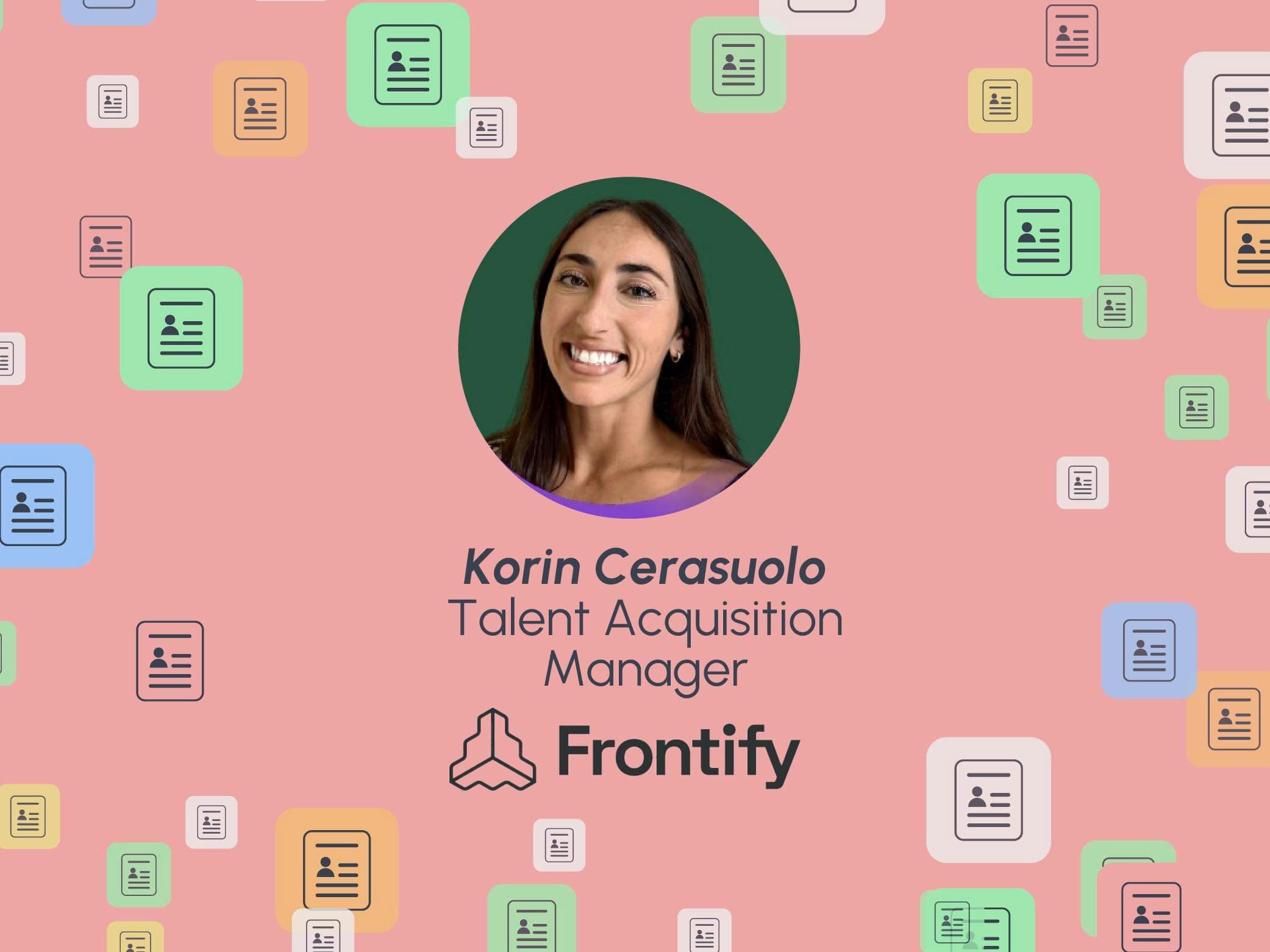
We spoke with Korin Cerasuolo, Manager for Talent Acquisition at Frontify, about how the team implemented Brainner’s AI resume screening and candidate fraud detection to manage increasing application volumes, prioritize top applicants faster, and identify suspicious candidates without sacrificing human control.
Frontify currently uses Lever as its Applicant Tracking System (ATS) and is in the process of migrating to Ashby. Since Brainner integrates with both ATS platforms, the team can maintain its AI-powered screening workflow throughout the transition.
The Good Problem: 400%+ Growth in Inbound Applications
Growing inbound recruiting is usually something Talent Acquisition teams celebrate.
Candidates know your company. Your employer brand is working. More people are actively interested in joining your organization.
But eventually, application volume can grow faster than the recruiting team’s ability to review it.
As Korin explains:
“As we’ve been scaling the team and growing our employer brand, the number of inbound applications we receive has increased 400%+ in the past 2-3 years.”
Suddenly, the challenge isn’t necessarily attracting candidates.
It’s identifying the right candidates inside all that inbound volume.
Frontify faced another important limitation in its existing workflow: applications were reviewed based on when candidates submitted them.
“Based on our current ATS system logic, all applications we review are based on the order of submission, which means we could miss high quality applications based on timing.”
Think about what that means in practice.
A great candidate could apply after hundreds of other applicants.
Their qualifications haven’t changed. Their suitability for the role hasn’t changed.
But simply because they applied later, it could take longer for a recruiter to discover them.
In high-volume recruiting, application order shouldn’t determine candidate visibility.
From Application Order to Candidate Fit
This was the gap Brainner helped Frontify address.
Instead of navigating applications primarily based on submission time, recruiters can define the requirements that actually matter for each position.
Korin explains:
“Brainner helped fill the gap for our team in making resume review more efficient.”
For each role, Frontify can configure the specific screening criteria that matter to the recruiting team. Brainner then analyzes incoming applications against those requirements, making it easier to surface the strongest candidates regardless of when they applied.
“We now can configure the criteria that matter most for each role, and then easily identify the top applicants.”
This changes how recruiters navigate a large applicant pool.
Instead of asking:
Who applied first?
The team can start with:
Who best meets the requirements we’ve defined for this position?
Brainner analyzes candidates against recruiter-defined criteria and provides transparent explanations behind the evaluation.
The recruiter defines what matters.
The AI performs the repetitive analysis.
The human remains responsible for the hiring decision.
AI Resume Screening Across Lever and Ashby
Frontify currently manages its recruiting process in Lever and is migrating to Ashby as its new ATS.
For the Talent Acquisition team, changing ATS doesn’t mean rebuilding its AI resume screening process from scratch.
Brainner integrates with both Lever and Ashby, allowing Frontify to maintain the same criteria-driven approach to screening and prioritizing inbound candidates as its recruiting technology stack evolves.
This is particularly relevant for scaling companies.
Your resume screening workflow shouldn’t be dependent on a single ATS.
As the underlying recruiting stack changes, teams can continue using Brainner to apply consistent screening logic across their applicant pipeline.
Why AI Resume Screening Becomes More Valuable as Inbound Grows
The difference between 100 and 500 applications isn’t simply 400 more resumes.
It’s potentially hours of additional repetitive work for the recruiting team.
And as application volume grows, another risk appears:
Great candidates get buried.
A recruiter may eventually find them, but the strongest applicants aren’t necessarily waiting for every company to finish its screening process.
That’s why AI resume screening isn’t only about saving time.
It’s also about candidate prioritization and speed.
If a strong candidate applies today, recruiters should be able to identify them based on fit rather than waiting until they’ve worked through every application submitted before them.
For scaling SaaS companies like Frontify, that can make high-volume inbound recruiting considerably more manageable.
More Applications Also Means More Candidate Fraud
Application volume wasn’t the only thing increasing at Frontify.
The recruiting team also started receiving more fraudulent applications, particularly for engineering roles.
As Korin explains:
“We also started to receive more fraudulent applications for our engineering roles, and Brainner made it easy to identify them.”
Candidate fraud has become another layer recruiters need to consider when managing high-volume inbound pipelines.
When hundreds of applications arrive for a position, manually reviewing resumes is already difficult. Investigating whether every applicant is legitimate adds another layer of work.
Brainner combines resume screening with candidate fraud detection, helping recruiters identify potential red flags and suspicious inconsistencies during the application review process.
Instead of automatically rejecting candidates, Brainner surfaces risk signals for the recruiting team to investigate.
This distinction is important.
AI identifies potential risks. Recruiters make the final decision.
For Frontify, this means the same workflow that helps identify the most relevant applicants can also help the team identify potentially fraudulent ones.
Saving Time to Improve the Candidate Experience
Perhaps the most important benefit isn’t what Brainner does.
It’s what recruiters can do instead.
Korin explains:
“I personally love the time I saved by using this screening tool, which allowed me to focus on improving the candidate experience.”
That’s an important distinction when discussing AI in recruiting.
The objective shouldn’t be to automate recruiting itself.
Recruiting involves conversations, judgment, stakeholder management, candidate relationships, employer branding, and many other activities where human involvement is essential.
But manually navigating hundreds of resumes looking for the same requirements?
That’s where technology can create leverage.
Every hour recruiters don’t spend on repetitive resume screening is an hour they can reinvest in higher-value work.
For Frontify, that means more time to focus on candidate experience.
Growing Your Employer Brand Shouldn’t Create a Recruiting Bottleneck
There’s an interesting paradox here.
Companies invest heavily in employer branding because they want more talented people to know them and apply.
Then employer branding works.
Applications increase.
And suddenly the recruiting team struggles because there are too many people interested in joining the company.
The solution shouldn’t be to make your company less attractive or discourage inbound applications.
It should be to build recruiting infrastructure capable of handling the success of your employer brand.
Frontify’s experience illustrates this clearly.
400%+ growth in inbound applications doesn’t have to mean 400% more manual screening work.
With the right AI resume screening process, recruiting teams can evaluate large applicant pools, prioritize candidates according to their own requirements, identify potential candidate fraud, and focus their time on the people and activities that require human attention.
Why Frontify Recommends Brainner
For Korin, three benefits stand out: time savings, ease of use, and customization.
“I’d recommend Brainner to other recruiting teams because of the ease of use and customization behind the resume review logic.”
That customization matters because every company and every position is different.
Recruiters should determine what makes someone relevant for a role.
Brainner provides the infrastructure to apply that logic consistently across the applicant pool while also helping teams navigate emerging challenges such as candidate fraud.
And because Brainner integrates with ATS platforms including Lever and Ashby, that screening process can continue even as a company’s recruiting technology stack evolves.
Frontify’s experience provides a good example of what AI can look like when it’s incorporated into an existing recruiting workflow rather than replacing it.
The employer brand generates demand.
The ATS manages the applications.
Brainner helps recruiters find the right people inside that volume.
Because the goal isn’t to receive fewer applications. It’s to make sure the best candidates don’t disappear inside them, while making it harder for fraudulent ones to slip through.
Continue reading
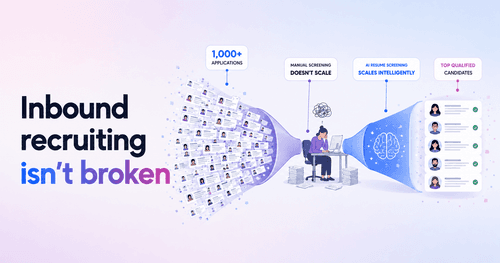
Is Inbound Recruiting Really Broken? How to Make It Your Strongest Hiring Channel in the AI Era
Inbound recruiting isn’t broken: the real challenge is efficiently screening high application volumes and identifying top talent before it gets buried. By combining AI resume screening, candidate rediscovery, fake applicant detection, and strategic outbound recruiting, Talent Acquisition teams can turn inbound into one of their most scalable and valuable hiring channels.
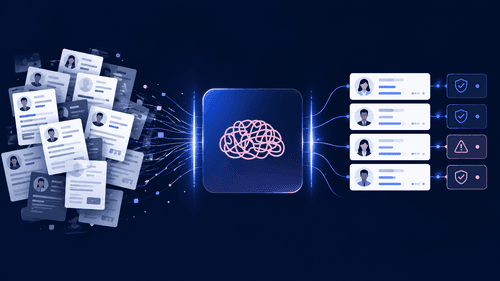
How to Detect Fake Applicants Without Slowing Down Your Pipeline
Brainner's two-step approach detects fake applicants without friction: criteria-driven screening + identity verification. Works with your ATS.
Save up to 40 hours per month
HR professionals using Brainner to screen candidates are saving up to five days on manual resume reviews.