
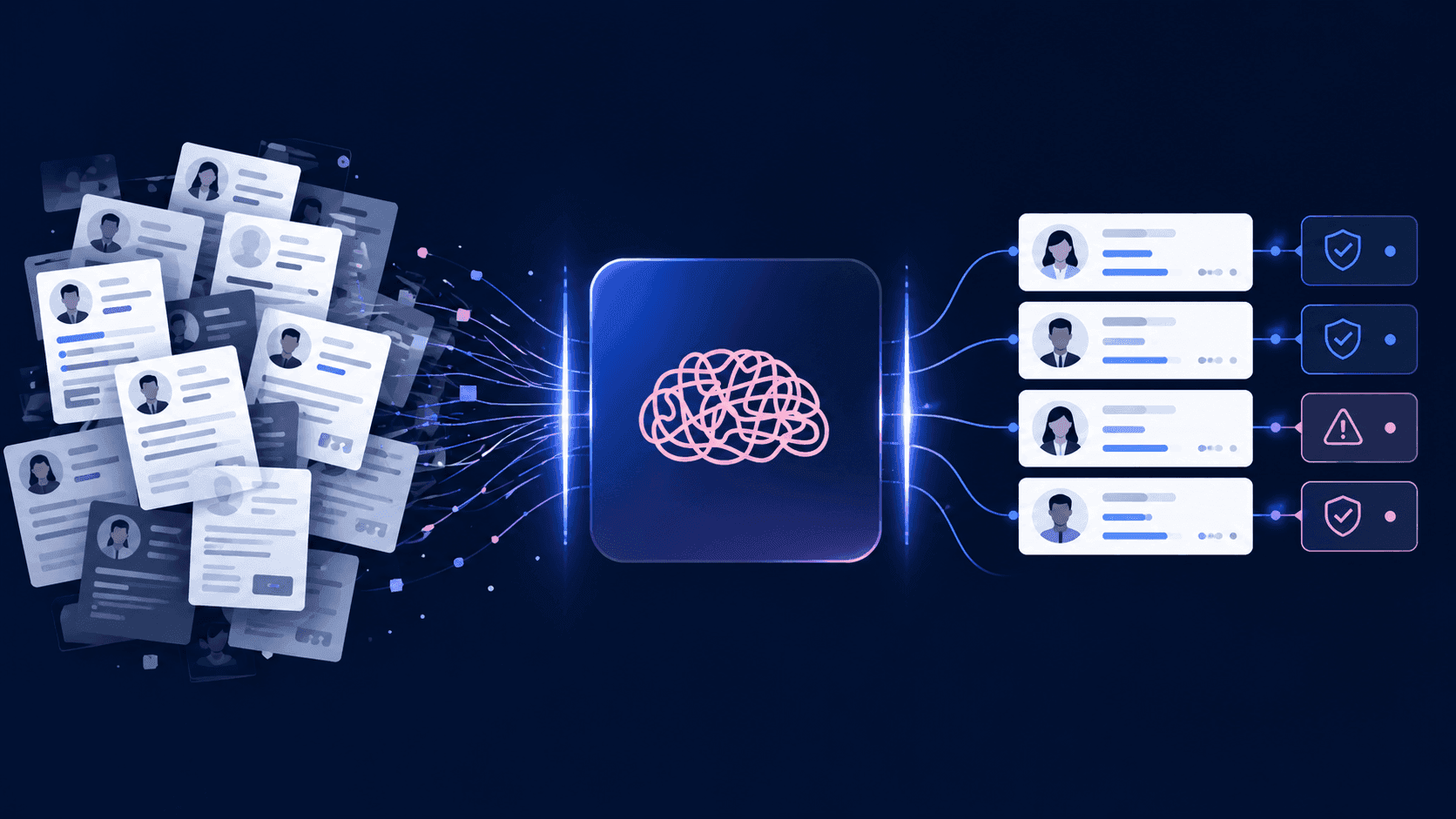
Brainner detects fake applicants using a two-step approach: first, criteria-driven AI screening filters applications down to qualified candidates. Then, the Identity Check Report runs automatically on those qualified profiles, flagging high-risk applicants before recruiters review them. This works integrated with Greenhouse, Lever, Workday, Recruitee, SmartRecruiters, Workable, JazzHR, Zoho Recruit, iCIMS, BambooHR, Ashby and other major ATS platforms.
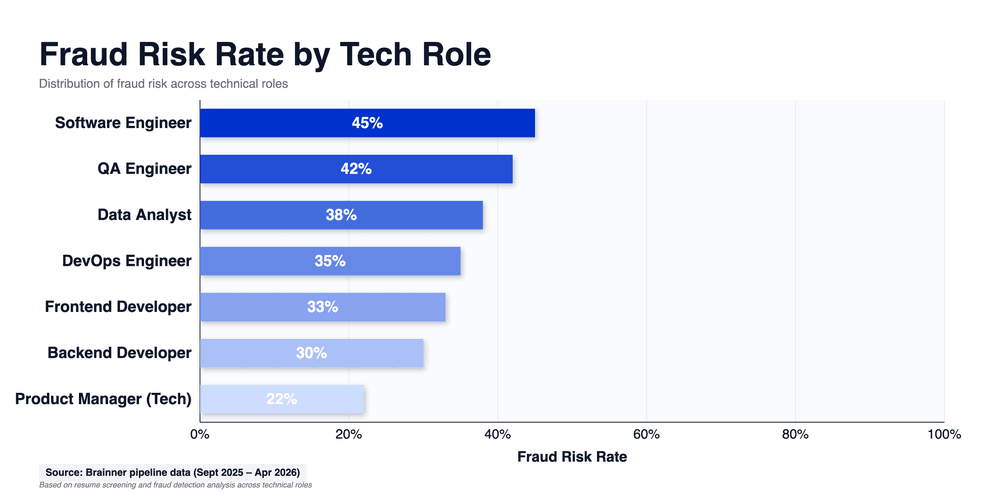
Remote tech roles see 30-50% fraud rates. But adding manual verification steps (LinkedIn stalking, upfront reference calls) slows hiring and loses real candidates to faster competitors. Brainner's approach catches fraud without adding friction: you only verify candidates who are already qualified.
Learn more about Brainner's AI resume screening.
The Hidden Cost of Fake Applicants in Remote Tech Hiring
Fake applicants create real risks: security breaches from fraudulent hires, compliance violations, and pipeline pollution that breaks your metrics and pushes away genuine talent. The time wasted is just the visible cost.
The Scale of the Problem
Remote tech roles see fraud rates between 30-50% according to Brainner pipeline data from 2025-2026. For a typical remote Data Analyst role with 300 applications, that means 90-150 fake profiles mixed into your pipeline. Without detection, recruiters spend an average of 45+ minutes reviewing each fake profile before realizing something's wrong.
The Friction Trap
Most companies respond to fraud by adding manual verification steps: cross-referencing LinkedIn profiles to check if the person exists and if the employer lists them, Googling phone numbers to verify area codes, checking email patterns for mismatches or burner accounts, and inspecting resume metadata for generation tools or suspicious creation dates. Recruiters become detectives before they become interviewers.
LinkedIn verification for every applicant? That's 5-10 minutes per profile.
Phone number checks? Another 3-5 minutes.
Email validation, social media searches, metadata inspection combined? Another 5-10 minutes. Reference calls before first interview? 10-15 minutes.
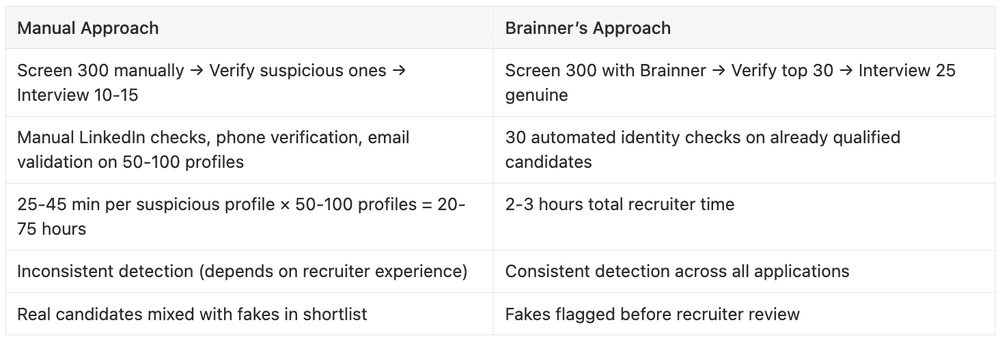
Add it all up and you're looking at 25-45 minutes per candidate. Multiply that by 300 applications and you're burning 125-225 hours of recruiter time per role. And while you're verifying fakes, the best real candidates accept offers from faster competitors.
This sometimes solves the fraud problem but creates a new one: slow time-to-hire that loses you real talent.
Brainner runs fraud detection after screening, not before. This means you only invest verification resources on candidates who are already qualified, not the entire pipeline.
Why Order Matters
Unlike other fraud detection tools, Brainner's two-step approach works differently: screen first to identify qualified candidates (based on the criteria you set), then run identity verification only on those top 30. You catch fraud without slowing down your pipeline or adding steps for real candidates.
Step 1: Criteria-Driven Screening (Filter the Good Ones)
Brainner's AI resume screening evaluates all applications against your custom criteria. This includes technical skills match (specific languages, frameworks, tools), experience level (years in role, seniority progression), industry background, role-specific requirements, and work authorization and location.
Output: 300 applications ranked by fit. Top 30 advance to verification.
This works integrated with your ATS platform. Recruiters see ranked candidates in their normal workflow.
Customizable Criteria
The criteria are fully customizable. You define what "qualified" means for each role. Need 3+ years of Python experience? Brainner filters for that. Want candidates with healthcare industry background? That becomes part of the ranking. Looking for specific certifications? Add them to the criteria. The AI ranks every candidate against your requirements.
How This Works with Your ATS
Brainner works integrated with Greenhouse, Lever, Workday, Recruitee, SmartRecruiters, Workable, JazzHR, Zoho Recruit, iCIMS, BambooHR, Ashby and other major ATS platforms. It doesn't replace your ATS - it adds AI screening and fraud detection on top, so your workflow stays exactly the same.
Step 2: Identity Check Report (Find the Genuine Ones)
The Identity Check Report runs automatically on the previously qualified 30 candidates. It cross-references contact verification (email domain age, phone carrier history, deliverability), profile consistency (LinkedIn vs. resume alignment on dates, titles, companies), location verification (phone country matches candidate location, IP patterns), behavioral signals (application timing, automated generation signs), and more. Each check appears as a line item in the candidate's Identity Check section - either validated with a green checkmark or flagged with a warning icon and specific context.
Output: 25 genuine candidates + 5 flagged as "High Risk"
"I was terrified a 'black box' would filter out the best talent. Two weeks in, I'm eating my words. Brainner surfaces the best matches and lets me fine-tune the profile weights myself. The fraud tool is a total lifesaver for flagging AI-padded resumes before they hit my already crowded calendar. Less noise, zero wasted interviews, and my time back."
Devin Ontiveros, Senior Talent Partner at Scan
The High Risk Flag
Brainner doesn't auto-reject. It flags with context. The recruiter sees this in the candidate profile, and the final decision is theirs:
- "High Risk: Location spoofing detected (VPN from sanctioned region)"
- "High Risk: Synthetic identity signals (email created 10 days ago, no digital footprint)"
The recruiter decides whether to proceed. The flag provides context, not a decision.
What the Identity Check Actually Detects
Brainner's Identity Check looks for signals that manual review misses: device fingerprints, contact history, cross-platform inconsistencies, and patterns linked to known fraud operations.
1. Synthetic Identity Fraud
Real employment data + fabricated contact details = synthetic identity.
Example: Resume shows legitimate work history at Google (2020-2023), Senior Engineer title. But the email was created 2 weeks ago, phone number has no carrier history, LinkedIn profile was created 3 months ago (not 3+ years), and there's no GitHub, no Stack Overflow, no professional digital footprint.
A real Senior Engineer who worked at Google for 3 years would have digital traces. This profile doesn't.
2. Location Spoofing
VPNs, proxies, and GPS tools to fake geographic location.
Example: Application claims Austin, Texas. But the IP address resolves to Southeast Asia, device timezone doesn't match claimed location, and multiple applications from same device show different "home addresses."
This matters especially for companies with compliance requirements around hiring from sanctioned regions.
3. Profile Inconsistencies
Discrepancies across LinkedIn, resume, and application data.
Example:
- LinkedIn: "Senior Software Engineer at Amazon, 2020-2024"
- Resume: "Lead Architect, Amazon Web Services, 2019-2025"
- Application email: Personal Gmail created last month
Which timeline is real? If the candidate can't keep their own story straight across platforms, something's wrong.
4. Behavioral Patterns
Mass application tools, script-based submissions, bot-driven profiles.
Some signals Brainner detects:
- 50+ applications submitted in 10 minutes (humanly impossible)
- Identical resume structure with minor text variations
- Applications from same device using different "identities"
- Copy-pasted answers to screening questions across multiple profiles
These patterns indicate automated fraud, not individual applicants.
"Before Brainner, resume review would take hours, and even then, we knew that great talent was getting buried in the process. With their fake applicant detection tool, we can confidently move forward knowing that the candidates we're speaking with are legitimate. It has saved us time, reduced risk, and allows us to focus on connecting with the right candidates."
Lauren Fisher, Senior Manager of Talent Acquisition at IMO Health
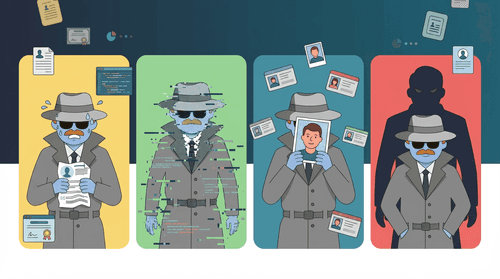
The 4 Types of Fraud Applicants
Not all fake applicants use the same tactics. Brainner's framework identifies four distinct types of fake applicants, each leaving different signals.
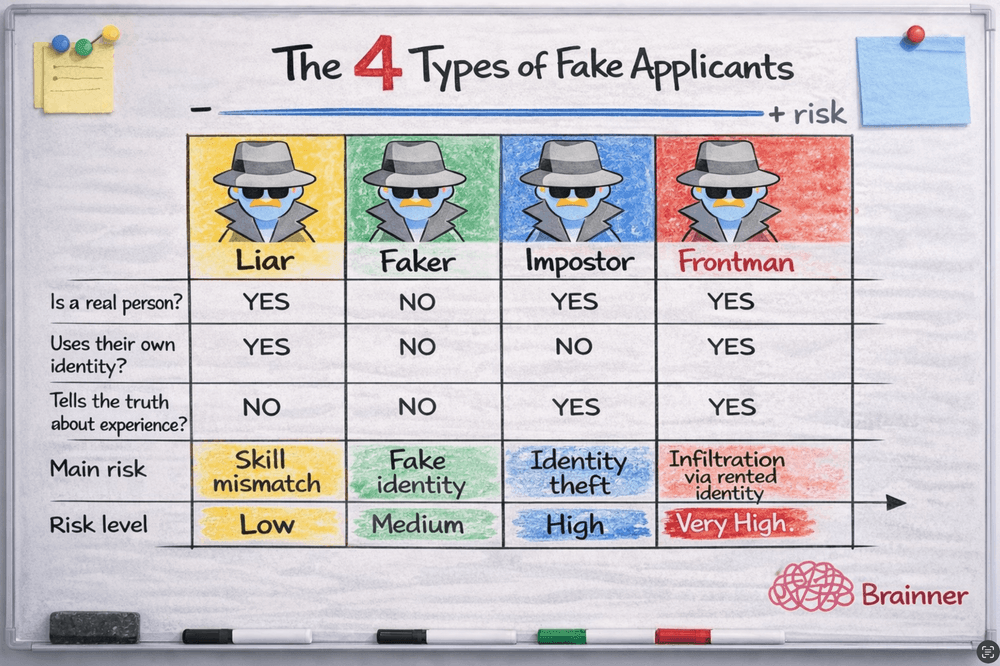
Read the full breakdown of each type → 4 types of fake appplicants
Why This Framework Matters
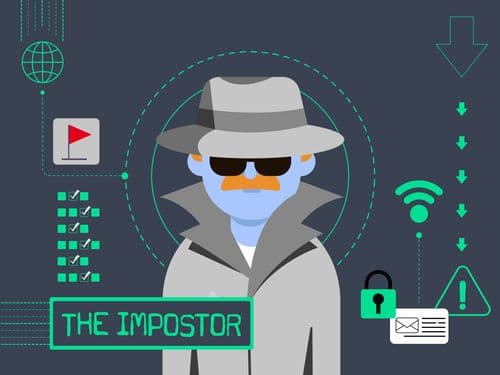
Each type leaves different signals. Liars show timeline mismatches. Fakers have no digital footprint. Impostors trigger contact verification failures. Frontmen show device inconsistencies between application and interview.
Brainner's Identity Check is trained to catch all four.
Why the Two-Step Approach Works
By running fraud detection only on qualified candidates, Brainner catches fraud without slowing down your pipeline.
No Friction Added
Candidates don't see extra steps. The application process inside your ATS stays the same: apply, complete any screening questions, submit. Brainner ranks them by fit, then verifies the top candidates. By the time a recruiter opens a profile, the High Risk flag (if any) is already there.
The Integration Advantage
Brainner syncs bidirectionally with your ATS through native integrations. When the Identity Check flags a candidate:
1. A "High Risk" tag appears in the ATS candidate profile
2. Detection details get added to application notes
3. The flag shows up before the recruiter opens the profile
Recruiters don't change their workflow.
Real Results: How Teams Use This
Companies using Brainner's two-step approach report 40-60% reduction in fake applicants reaching recruiter review, without adding time to their hiring process.
Case Study Snapshot
Before Brainner:
- 300 applications per remote tech role
- Approximately 120 fake profiles mixed into pipeline
- Recruiters spent 8-10 hours per role on initial review
- 3-4 fake candidates made it to phone screens (wasted interview time)
After Brainner:
- 300 applications → 30 qualified → 5 flagged High Risk
- Recruiters review 25 genuine candidates only
- Initial review time: 2-3 hours
- Zero fake candidates in phone screens
Time saved: 5-7 hours per role × 10 roles per quarter = 50-70 hours recruiter time saved
"Fraud in recruiting is a real problem: fake candidates, inflated profiles, wasted time. Brainner makes the screening process more reliable and trustworthy. And beyond the features, their support team is genuinely outstanding: fast, human, and always helpful whenever I have a question."
Thayná R., Technical Recruiter at G2i
What This Means for Hiring Velocity
That's 50-70 hours that can go toward interviewing real candidates, building relationships with top talent, or improving the candidate experience. It's also faster time-to-hire because you're not wasting days reviewing fake profiles or conducting phone screens with fraudulent applicants.
If you want to try Brainner >>> Book a demo with us
FAQs
Learn more about Brainner
Fake applicants are candidates who misrepresent their identity, fabricate work history, or use third-party proxies to pass screening and assessments. In remote tech roles, fraud rates range from 20 to 45% of total applications based on Brainner pipeline data from 2025 to 2026. For a typical remote Data Analyst role receiving 300 applications, that means up to 130 fraudulent profiles mixed into the pipeline before any recruiter opens a single resume.
Brainner's Identity Check Report detects over 20 fraud signals across different categories. Contact verification flags include email domains created within the last 30 days and phone numbers with no carrier history. Profile consistency flags include mismatches between LinkedIn and resume dates, titles, or employer names. Location signals include IP addresses resolving to regions different from the candidate's claimed location. Behavioral signals include multiple applications submitted within minutes from the same device using different identities, and copy-pasted screening answers across profiles. Any combination of these signals triggers a High Risk flag in the candidate's profile inside the ATS.
Brainner's Identity Check can run on all applicants, but the recommended approach is two-step: AI resume screening first, identity verification second. All applications are evaluated and ranked against custom criteria. Running the Identity Check only on the top qualified candidates means fraud verification resources focus where they matter most, rather than processing the full pipeline. By the time a recruiter opens a profile, the High Risk flag is already there if one applies. Candidates do not experience any added friction, and the application process inside the ATS stays unchanged.
Brainner integrates with Greenhouse, Workday, Lever, iCIMS, BambooHR, Workable, SmartRecruiters, Recruitee, JazzHR, Ashby, Zoho Recruit, and other major ATS platforms. When the Identity Check flags a candidate as High Risk, a tag appears directly in the ATS candidate profile, detection details are added to the application notes, and the flag is visible before the recruiter opens the profile. This means fraud signals surface inside the existing recruiter workflow, with no new tool or interface required.
Identity verification in recruiting confirms that the person applying is who they claim to be, before any interview takes place. Background checks typically run post-offer and verify criminal history, employment records, or education credentials. Brainner's Identity Check runs at the application stage, flagging synthetic identities, location spoofing, profile inconsistencies, and behavioral fraud patterns before a recruiter invests any time in the candidate. It complements background checks but addresses a different and earlier point in the process.
Brainner connects to major ATS platforms through native, bidirectional integrations. When fraud signals are detected, the system writes directly to the ATS: a High Risk tag appears on the candidate profile, detection context is added to application notes, and the flag is visible before the recruiter reviews the profile. No manual exports, no change to the recruiter's workflow.
Yes. Brainner's approach eliminates the need for manual verification steps such as cross-referencing LinkedIn profiles, Googling phone numbers, or checking email metadata on every application. Instead, those checks run automatically on qualified candidates only, after AI resume screening has already filtered the full pipeline. Recruiters who previously spent 25 to 45 minutes per candidate on manual fraud checks report reviewing only genuinely qualified, verified profiles, with initial review time dropping from 8 to 10 hours per role to 2 to 3 hours.
Proxy interviewing, where someone other than the applicant performs the interview or assessment, is one of the hardest fraud types to catch at the application stage. Brainner's Identity Check surfaces device inconsistencies between application and interview, behavioral patterns tied to known fraud operations, and contact verification failures that indicate the submitted identity does not match the person interacting with the process. High Risk flags on these candidates allow recruiters to request additional identity confirmation before advancing them to interviews, stopping proxies before they consume interview time.
Brainner is SOC 2 Type II, GDPR, and CCPA certified. The Identity Check Report processes candidate data in line with these standards. Recruiters retain full decision-making authority. Brainner flags High Risk candidates with specific context, but does not auto-reject or take action on any candidate. The final hiring decision always belongs to the recruiter or TA team.
Still have questions?
Book a demo or .
Continue reading
The 4 Types of Fake Applicants: How to Identify and Detect Each One
There are 4 types of fake applicants: Liars, Fakers, Impostors, and Frontmen. Each poses different risks and requires different detection methods.
How Recruiters Can Detect Fake Applicants Early
Fake applicants are flooding remote hiring pipelines. Learn the 4 types, the red flags recruiters miss, and how Brainner detects them early.
Save up to 40 hours per month
HR professionals using Brainner to screen candidates are saving up to five days on manual resume reviews.