
TL;DR
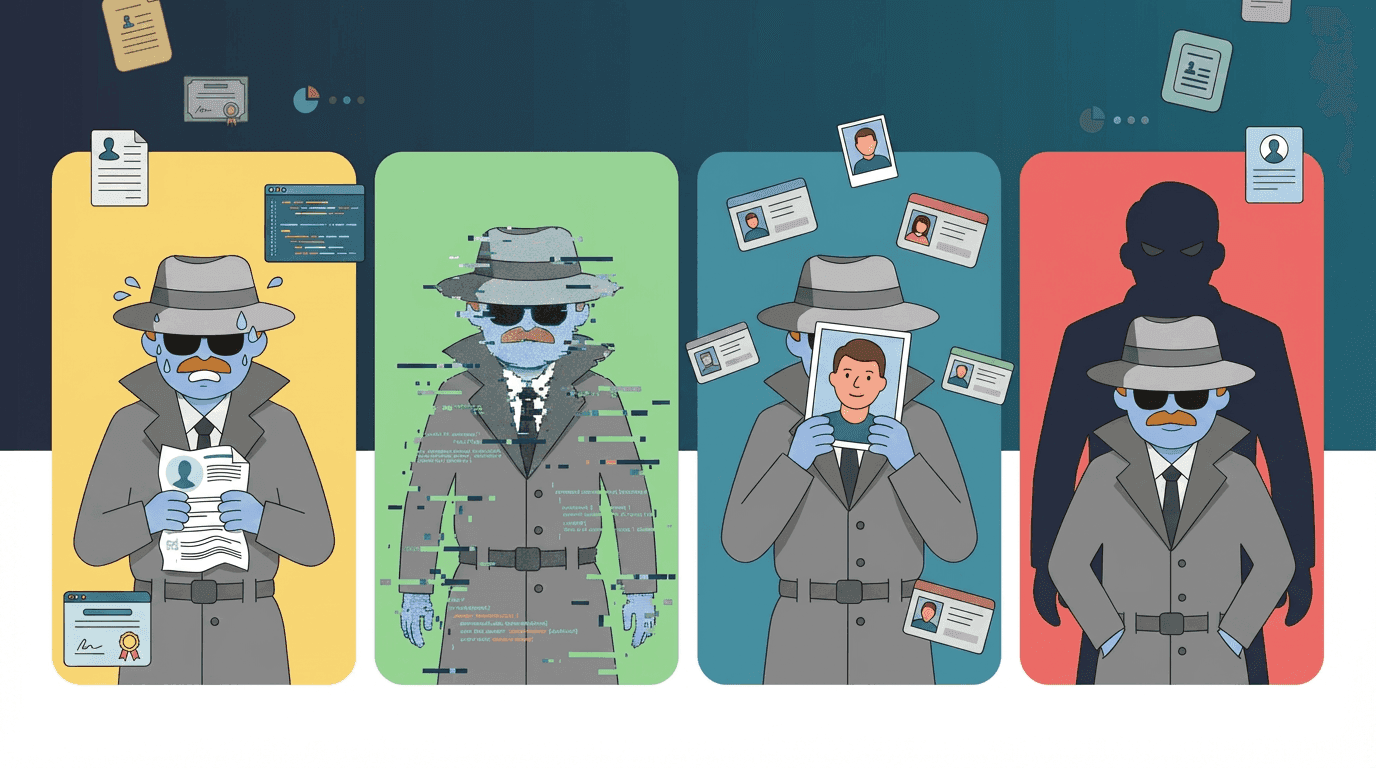
There are four types of fake applicants, and each one requires a different detection approach:
1. Liars exaggerate experience. Risk: skill mismatch. Detection: skills assessments.
2. Fakers are synthetic identities. Risk: fake identity. Detection: identity verification.
3. Impostors use stolen identities. Risk: identity theft. Detection: document verification.
4. Frontmen rent their identity to someone else. Risk: infiltration. Detection: behavioral analysis.
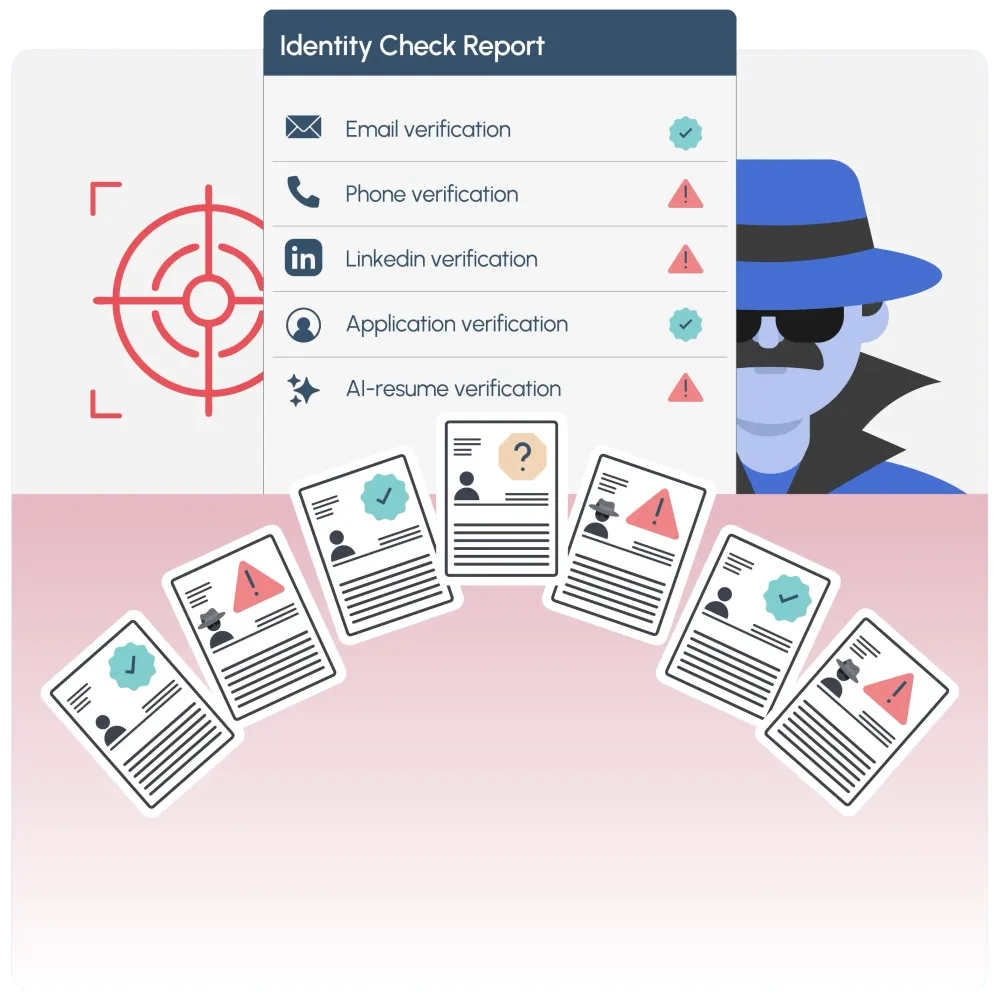
Our analysis of 1 million+ applicants shows that Data Analyst, Software Engineer, AI Engineer, and QA roles attract the highest concentration of fraudulent applications. Brainner helps talent acquisition teams detect all 4 types of fake applicants through automated Identity Check Reports that flag High Risk candidates before they reach the recruiter's queue.
What is candidate fraud and why is it increasing in 2026?
Candidate fraud is the intentional use of deceptive tactics or fabricated information to gain employment under false pretenses. This includes falsifying credentials, using stolen identities, deploying AI tools to misrepresent skills, and using proxy interviewers.
According to Gartner, fraudulent or AI-generated candidates have emerged as one of the top threats to talent acquisition teams. A 2025 Gartner survey found that 6% of candidates admitted to interview fraud, and Gartner predicts that by 2028, one in four candidate profiles worldwide will be fake.
This happened to a Brainner client. They posted a remote Data Analyst role. Within days, hundreds of applications arrive. The resumes look different: different names, different formatting, different wording. But Brainner flagged a high percentage as High Risk. The fraud signals, invisible to manual review, were consistent across multiple applicants.
The problem has evolved. Bad actors did not stop at lying. They moved to fake identities. Then stolen identities. Now they are renting identities.
What are the 4 types of fake applicants?
There are four distinct categories of fraudulent candidates. Brainner has mapped detection patterns for each type after analyzing over 1 million applicants across Tech, Fintech, Healthtech, and other industries.
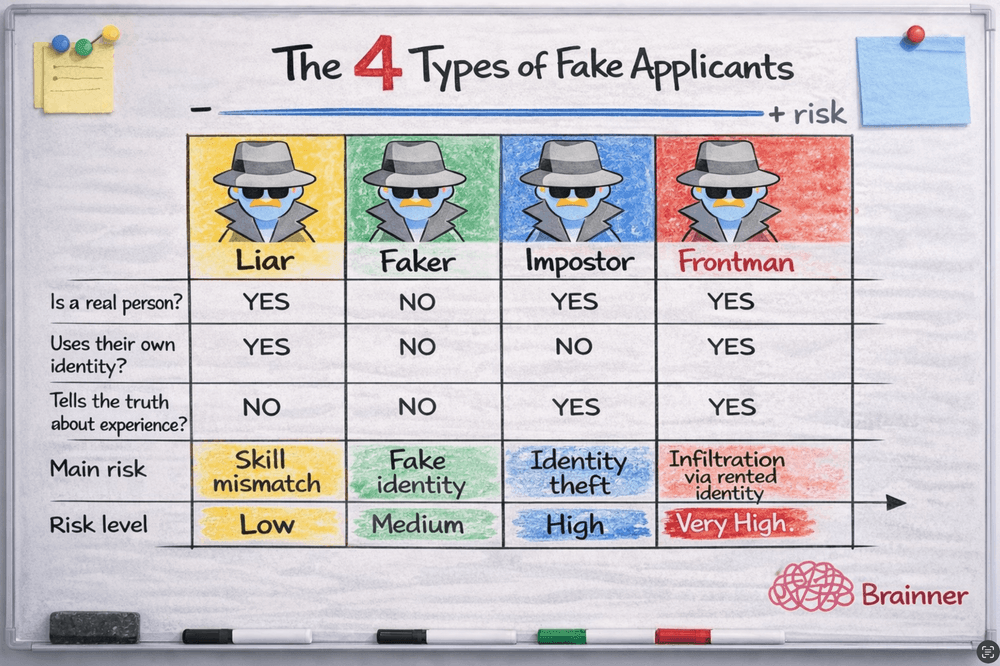
Brainner detects all four types at the application stage through the Identity Check Report, flagging High Risk candidates before they reach the recruiter's queue.
What is a Liar in candidate fraud?
A Liar is a real person using their own identity who misrepresents their experience, skills, or qualifications. They exaggerate job titles, fabricate achievements, or claim proficiency in skills they do not have.
Example: The inflated Python developer. A candidate claims 5 years of Python experience and lists "lead developer" as their previous title. Reference checks reveal they were a junior developer for 18 months and used Python only for basic scripting. The skills did not match the role requirements.
- Main risk:Skill mismatch. You hire someone who cannot perform the job.
- Risk level: Low. The person is who they say they are. The damage is operational, not security-related.
- How to detect Liars before hiring: Skills assessments, structured interviews with behavioral questions, and thorough reference checks. Brainner cross-references claimed experience against industry patterns and identifies inconsistencies in resume narratives before the recruiter reviews the application.
This is the most common form of candidate fraud.
What is a Faker in candidate fraud?
A Faker is a completely fabricated identity. The person does not exist. The resume, LinkedIn profile, and credentials are entirely synthetic, often created using AI-generated photos and fake work histories.
Example: The AI-generated profile. An application arrives with a polished LinkedIn profile showing 8 years at three well-known tech companies. A reverse image search reveals the profile photo is AI-generated. Calls to the listed employers confirm no one by that name ever worked there. The entire candidate was fiction.
A 2025 Gartner survey found that 39% of candidates use AI in their applications, and the sophistication of synthetic identities is increasing rapidly.
- Main risk: Fake identity. You are not hiring a person. You are hiring a fiction, potentially part of a data harvesting or access-seeking operation.
- Risk level: Medium. Fakers are often caught during background checks because fabricated histories do not hold up to verification.
- How to detect Fakers before hiring: Identity verification tools, reverse image searches on profile photos, and direct verification of employment history. Brainner flags synthetic identity markers including AI-generated profile photos, fabricated work histories, LinkedIn profiles with few connections or no activity, and references to non-existent companies.
What is an Impostor in candidate fraud?
An Impostor is a real person using someone else's stolen identity to apply for jobs. The resume details may be accurate, but they belong to a different person.
Example: The camera-off candidate. A candidate passes the phone screen with impressive answers. During the video interview, they keep their camera off, citing "technical issues." When finally on camera for the final round, the person looks noticeably different from their LinkedIn photo. The recruiter later discovers the original identity belongs to a software engineer in another country whose credentials were stolen.
- Main risk: Identity theft. You have a criminal working under a false identity with access to your systems, data, and facilities.
- Risk level: High. Impostors have deliberately committed identity fraud. Their motives are rarely benign.
- How to detect Impostors before hiring: Live identity verification during interviews, document verification systems that cross-reference government IDs, and behavioral analysis during video calls. Brainner identifies mismatches between application data and verified identity records at the moment of application, including recently created email accounts and virtual phone numbers.
What is a Frontman in candidate fraud?
A Frontman is a real person using their own identity who interviews and gets hired on behalf of someone else. Once onboarded, a different person (often overseas) connects remotely using VPNs and remote desktop tools to do the actual work.
Example: The dual-timezone worker. A US-based company hires a remote software engineer who passes all interviews. Three months in, IT security notices the employee logging in from IP addresses in China at 3am local time, then again from a US IP at 9am. Investigation reveals the "employee" is actually two people: a US-based frontman who handles video calls, and an overseas developer who does the actual coding. The frontman was paid $500/month to rent his identity.
This is the model used by North Korean IT worker operations. Microsoft documented that between 2020 and 2022, over 300 US companies, including several Fortune 500 firms, unknowingly employed workers through this scheme. CrowdStrike identified a 220% increase in 2025 in such cases. The FBI reported that Amazon blocked more than 1,800 applications from suspected North Korean operatives.
- Main risk: Infiltration via rented identity. The person you hired is not the person doing the work. This creates data exfiltration, IP theft, extortion risks, and potential theft of company information.
- Risk level: Very high. Frontman schemes are connected to organized criminal operations or state-sponsored actors.
- How to detect Frontmen before hiring: This is the hardest type to detect because the frontman's identity is real and verified. Detection requires behavioral analysis during employment, geolocation monitoring, and continuous authentication tools. Brainner analyzes behavioral patterns and application metadata that indicate proxy schemes, including geographic anomalies. The system also cross-references applicants against a proprietary database of over 1 million candidates that were flagged and reported by clients.
See how Brainner detects fake applicants → Book a demo
Why does the type of fake applicant matter for your hiring process?
Each level increases the risk. From wasted interview time to potential data breaches and unauthorized internal access.
A Liar costs you a bad hire. According to the U.S. Department of Labor, a bad hire costs up to 30% of first-year earnings. For an $80,000 position, that is $24,000.
A Frontman can cost everything. Beyond bad hire costs, you face data breaches, regulatory fines, IP theft, and potential extortion.
Client result: IMO Health. Lauren Fisher, Senior Manager of Talent Acquisition at IMO Health, was receiving hundreds to thousands of applicants per role, making it impossible to identify legitimate candidates manually. After implementing Brainner, her team now screens high-volume applications automatically while catching fake applicants before they reach the interview stage. In her words:
"With their fake applicant detection tool, we can confidently move forward knowing that the candidates we're speaking with are legitimate. That's been a huge advantage for our team."
How can you automatically detect fake job applicants before hiring?
Detection requires a layered approach because each fraud type exploits different vulnerabilities.
- For Liars: Skills assessments, structured behavioral interviews, and reference verification.
- For Fakers: Identity verification, reverse image searches, and employment history verification.
- For Impostors: Live identity matching, document verification, and cross-referencing government IDs.
- For Frontmen: Behavioral analysis, geolocation monitoring, and continuous authentication.
This is no longer something you can reliably catch with just the human eye. Brainner helps talent acquisition teams detect all 4 types of fake applicants through automated Identity Check Reports, analyzing over 3.5 billion data points to flag High Risk candidates at the application stage.
Our analysis of 1 million+ applicants reveals a consistent pattern: Data Analyst, Software Engineer, AI Engineer, and QA roles attract the highest concentration of fraudulent applications. If your team is hiring for these positions, especially remote roles, fraud detection is not optional.
Learn more about Brainner's fraud detection | See how IMO Health catches fake applicants
FAQs
Learn more about Brainner
It depends on the company and position, but Gartner predicts that by 2028, 25% of candidate profiles worldwide will be fake.
The Frontman is most dangerous because they pass identity verification but a different person gains access to your systems. This model is used by North Korean IT worker schemes that infiltrated over 300 US companies.
Yes. Brainner's Identity Check Report analyzes over 3.5 billion data points to detect Liars, Fakers, Impostors, and Frontmen at the moment of application, flagging High Risk candidates before recruiters review them.
A Liar costs approximately 30% of first-year salary. A Frontman can cost significantly more due to data breaches, regulatory fines, IP theft, and extortion.
Brainner's analysis of 1 million+ applicants shows Data Analyst, Software Engineer, AI Engineer, and QA roles attract the highest concentration of fraudulent applications, especially for remote positions.
Still have questions?
Book a demo or .
Continue reading
How Recruiters Can Detect Fake Applicants Early
Fake applicants are flooding remote hiring pipelines. Learn the 4 types, the red flags recruiters miss, and how Brainner detects them early.
How to Detect Fake Applicants: Best Practices
A best practices guide to detecting fake applicants: the most common red flags across LinkedIn, email, resumes, phone numbers, and behavior.
Save up to 40 hours per month
HR professionals using Brainner to screen candidates are saving up to five days on manual resume reviews.